
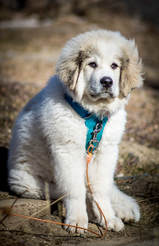
 Great Pyrenees were originally bread as guardian dogs for livestock and have been used by shepherds for hundreds of years, primarily guarding flocks of sheep and goats from wolves and other predators. Literary documentation of the breed dates back as far as the early 1400s.
The Great Pyrenees hail from The Pyrenees Mountains of Southern France and Northern Spain where their weather resistant double coat makes winter weather more than bearable. The coat of a male Pyrenees is much thicker around the neck and shoulders making them more resilient to wolf attacks. Great Pyrenees average 90 - 130 pounds depending on gender and are typically born with random dark patches of color, but become mostly white as they mature. In general, The Great Pyrenees is a gentle (especially with children) and loyal breed, but will protect flock and family when necessary. They are patient and attentive, but also independent and strong willed. Great Pyrenees often prefer to be outside (especially when its cooler), they will patrol their home perimeter and maintain a state of alert, confident guardianship barking to alert the family to any potential dangers. They're fuzzy, they're cute, they're lovable and you know that if you have a Great Pyrenees then you have your own personal home security system!
0 Comments
 A couple of the Pet Au Pairs team members recently took a trip to Switzerland and so we thought it would be fun to share a little something we learned about Swiss culture.
Many of the cows of Switzerland are given a vacation from the hard work of cheese production and sent to the high alpine meadows during the summer months to lazily graze while the farmers back home use the winter fields for hay production. During their months in the alpine the cows wear bells to help farmers locate those that may wander off. The bells are not only used as beacons, however, they are also used as a status symbol and bigger is better! The farmers who are most prosperous will place the largest bells on their cows, hanging from beautifully designed leather collars and often times the bells worth can exceed that of it's wearer. In the fall, after the cow's 'vacation', they are adorned with hats and necklaces made of flowers and paraded back to their winter barns. Swiss Cows have it made! 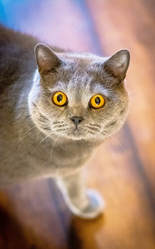 The British Shorthair is thought to date as far back as the first Century AD. This feline breed was imported from Egypt, brought over by the Romans when they invaded Great Britain, making it one of the most ancient breeds. Characteristics of the shorthair have changed very little from it's original ancestors.
This breed was originally a protector of the barn as it was a magnificent hunter of rats and mice, but in modern day prefers much more to curl up by the fire and spend it's time relaxing indoors. The British Shorthair is known for being dignified while easy going, loyal, and good with children - making it a great family pet. With a short, but plush coat of beautiful fur that begs to be stroked, they're happy to welcome the attention. Often referred to as the Winston Churchill of cats, this breed is suspected to have been the inspiration behind the Cheshire Cat of Lewis Carroll's Alice in Wonderland. Now doesn't that just make you smile? 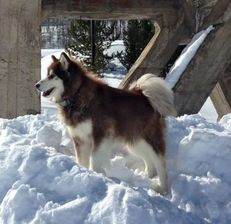 It is believed that the Alaskan Malamute is a descendant of the domesticated wolf-dogs that accompanied the first Paleolithic hunters across the land bridges of the Bearing Straight more than 4,000 years ago. There is strong archaeological evidence suggesting that the Malamute was the first dog associated with man.
They were named for the Mahlemuts, a native Inuit tribe that settled along the shores of the Kotzebue Sound in NW Alaska and became the official State Dog of Alaska in 2010. The ancient tribes lived in harmony with the Malamute, sharing food with them in exchange for help with hunting and hauling meat. During the cold Alaska winters, human babies were often put to sleep with the dogs as they could keep a baby very warm. The Alaskan Malamute is a very loving and trusting breed, they are great with all family members and other dogs. Even though they thrive on roaming free and spending time outdoors, they love being a part of the family too. They are not known to be a barking breed, but they are very vocal and howl often. Malamutes are very strong and built for heavy work, they require regular exercise and often thrive when given a job to do. Because of their size and strength they can cover long distances in a very short time and due to their very trusting nature they often will accompany anyone on an adventure. The Ideal Crested Butte Dog! 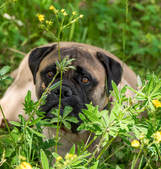 The Bullmastiff originated in Britain around the mid 1800s when gamekeepers bred the English Mastiff and the (now extinct) Old English Bulldog to create a breed of guard dog to protect large country estates from poachers. Standing a little over two feet tall (from top of shoulder to floor) they can range in weight anywhere from 100 to 130 pounds depending on gender. Bullmastiff's are known not only for their size, strength and speed, but also for their quiet and less-aggressive temperament - for this they became known as the Gamekeeper's Night Dog. If a poacher was detected entering the estate the Bullmastiff could cover short distances quickly, knock the intruder down and hold them there until the Gamekeeper arrived.
In modern times the Bullmastiff is known as the loyal family dog. They require structure and consistency to maintain their good nature, but with proper training and attention they are good with all ages and you will only encounter their guardian side if they sense their loved ones are in danger. Not to mention they're just plain fun! Since Mother's Day is just around the corner, we thought it fitting to share a few fun facts about the bonds between mothers and babies in the animal kingdom.
Did you know?: -Mother cats are referred to as Queens, as all mothers should be! A cat's purr is within the range of 20 to 104 Hz which has been scientifically proven to be therapeutic and speeds healing of inflammation, broken bones and torn soft tissue. A Queen purrs almost constantly during her kitten's first 3 weeks of life. -Puppies are able to recognize the sent of their mothers for up to ten years. So, if you're ever wondering if our furry friends remember family when reunited, the answer is very likely yes! -Elephant mothers carry their babies for almost two years, 22 months, the longest know gestation period. Elephant calves are born blind and are welcomed into the world with caressing and trumpeting from the entire herd. -Orca mothers must help their babies to the ocean's surface immediately after birth to take their first breath. Female Orcas will stay with their mothers their entire life, which can be as long as 90 years. Go Moms! 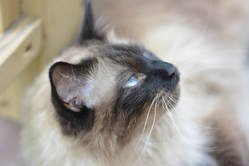 The Siamese were originally brought to the US from Thailand in the late 1800s. It is widely believed that Siamese descend from the Sacred Temple Cats of Siam, now know as Thailand and are one of the oldest Asian breeds. The breed was considered so prestigious that only the King and Royal Family were allowed to keep them as pets.
Siamese are the most highly recognized breed in the world and appear in poems and myths dating back as early as 1350. Adele Locke is recorded as owning the first registered Siamese "Stockehaven Siam". Locke owned multiple Siamese in her lifetime and traveled frequently to show them. Many photos of Adele and her Siamese can be found by completing a simple Internet search. Siamese are one of the most talkative breeds of cats, they talk with their voice and their body and are extremely social. Siamese are very active and extroverted, they crave human interaction and bond strongly with their human companions. If you have a Siamese in your home you will never be lacking for conversation or company, they tend to want to be involved in whatever your doing and will talk with you the entire time. So if you're looking for a chatty companion who tends to always be underfoot, but is guaranteed to keep you laughing, the Noble Siamese may be the next cat for you.  Myth Bust: Labs do not hail from Labrador, but in fact from Newfoundland.
Labradors are decedents of the St. John's Water Dog brought over from England by the early settlers of Newfoundland in the 18th Century. The fisherman of Labrador were a hearty bunch, braving the cold climate of the coast and so, their dogs had to be too. Labradors were used on Combat Tracker Teams in the Vietnam War and in modern day are popular as companions for the disabled (primarily the blind) and in bird hunting. The term 'retriever' comes from their ability to fetch downed foul out of bodies of water with their very gentle mouth, returning the bird to their owner without damaging it. Lab's come in three colors: Black, Yellow and Brown; Their short coat is dense and ideal for repelling and resisting cold water - great for those icy Crested Butte lakes and rivers . Their temperament makes them extremely eager to please, loyal and gentle companions. It is easy to see why our lovable Labradors are known to be the most popular dog breed in the world. Spring has sprung in the mountains and that means mud season has arrived in Crested Butte! As pet owners, we all know the unavoidable truths that come with this season; EVERYTHING IS GOING TO GET DIRTY! If you have lived in the valley long enough, you have resigned yourself to the fact that there really is no point in attempting to clean up until the snow has melted and the sun has dried everything up. I have learned that the best way to cope is just to laugh and soak it all in. We all gain great joy from watching our fur babies play and explore and so you have to remember what fun it is for them to roll, jump, burrow, wallow, and everything else in the most disgusting of things; so smile, observe and enjoy! This is nothing that a bucket of water, some suds and a towel can't fix. The more fun we have with our pets, in their world, the stronger our bonds become and the deeper your relationship will be. True love and true stink, that's what it is all about... right?
|